What Causes Cancer?
Even after over 40 years of research, there is no definitive answer on what causes cancer. Sure, we know that direct exposure to toxic chemicals can cause cancer, and many people believe that the pesticides and preservatives in our food supply are culprits.
This could be, but cancer has been around a very long time. The first writings about cancer came from the Ancient Greeks. The Egyptians also experienced cancer. Presumably, there weren't any toxic chemicals being added to the food supply or lurking in the workplaces in those ancient time periods. So what caused cancer back then?
Again, there's no definitive answer, but there are few facts which make interesting "food for thought" on the subject of what causes cancer:
- Dr. Tom Cowan has written an interesting article on a possible link. In 1842, a French physician name Stanislas Tanchou presented a paper titled "Memoir on the Frequency of Cancer" to the Paris medical society. He claimed that he could predict the exact cancer rates in every major European city over the next 50 years based on the extent of "civilization" of the city. Tanchou showed that the rates of cancer were higher in cities and lower in rural populations. He predicted that as civilization increased, the rates of cancer would increase. One of the factors involved in industrialization and the infiltration of civilization is a higher consumption of processed food products containing sugar and grain. Dr. Tanchou predicted that cancer would never be found in hunter-gatherer societies. Hunter gatherer tribes known around the world then were being studied, and various researchers reported remarkably that no cases of cancer were found. It was only after these populations adopted a Western grain/sugar based diet (the diet of civilization) that cancer appeared.
- Cancer rates are very rare and even non-existent in primitive cultures who consume a hunter-gatherer diet (meaning mostly animal foods, some plant foods, but no grain).
Here's an excellent interview with author Gary Taubes in which he discusses the fact that native peoples eating traditional diets don't get cancer:
Other Factors to Consider
- What about all the money spent on cancer research? Billions of dollars have been spent on the question of what causes cancer. And sadly, the results of all that spending are pretty dismal.
Cancer drugs are more damaging to many people than the original cancer, and none of these drugs offer a cure or even better survival rates, 50 years into the cancer fight. At least one researcher has written that people diagnosed with cancer actually live longer if they avoid the mainstream cancer treatments.
- Cancer treatments using the Ketogenic Diet are much more promising. Basically, the idea is to starve the cancer of the sugar it needs to live. The ketogenic does that pretty effectively and without damaging the other healthy cells. There are quite a few studies being conducted testing this theory.
When you look at the facts above, it seems pretty clear that a high carbohydrate, grain and sugar based diet has at least a plausible connection to what causes cancer.
It's just this basic. People who eat a diet free of grain and sugar rarely get cancer. Humans who eat a grain and sugar laden diet develop cancer at higher rates.
This would explain why the Greeks and Egyptians had cancer even though they didn't have the processed foods, environmental toxins and chemical preservatives we have today.
Bread dipped in olive oil made up a large part of each meal for the ancient Greek peoples. The Ancient Egyptians' diet consisted mostly of bread and beer, both made from grain.
Resources for Further Reading
- Here's a video from Craig Thompson, MD, the current president of the Memorial Sloan-Kettering Cancer Center, on his staff's current thinking about what causes cancer. The whole video is interesting, but at about the 17:40 minute mark, the rubber hits the road. He talks about how cancer cells mutate to absorb more glucose than normal, and how the overconsumption of carbohydrates dramatically increases your cancer risk. This parallels Otto Warburg's "cancer cells need sugar" hypothesis.
- Here's another paper which discusses the "Warburg Effect" and cancer as a metabolic disease.
- This paper discusses "How a Low Carbohydrate, High Protein Diet Slows Tumor Growth and Prevents Cancer Initiation."
- Dr. Dominic D'Agostino, an Assistant Professor and cancer researcher at the Hyperbaric Biomedical Research Laboratory at the University of South Florida has a KetoNutrition blog on which he writes about ketogenic diets for cancer treatment.
- In his book "Cancer as a Metabolic Disease: On the Origin, Management, and Prevention of Cancer", Dr. Thomas Seyfried describes the target ranges of blood glucose levels and ketone levels that are optimal for stopping the growth of the cancer.
Thank you for taking the time to read this page. If this information has been helpful to you, you are welcome to make a donation towards the operating costs of this site. Your support is appreciated.
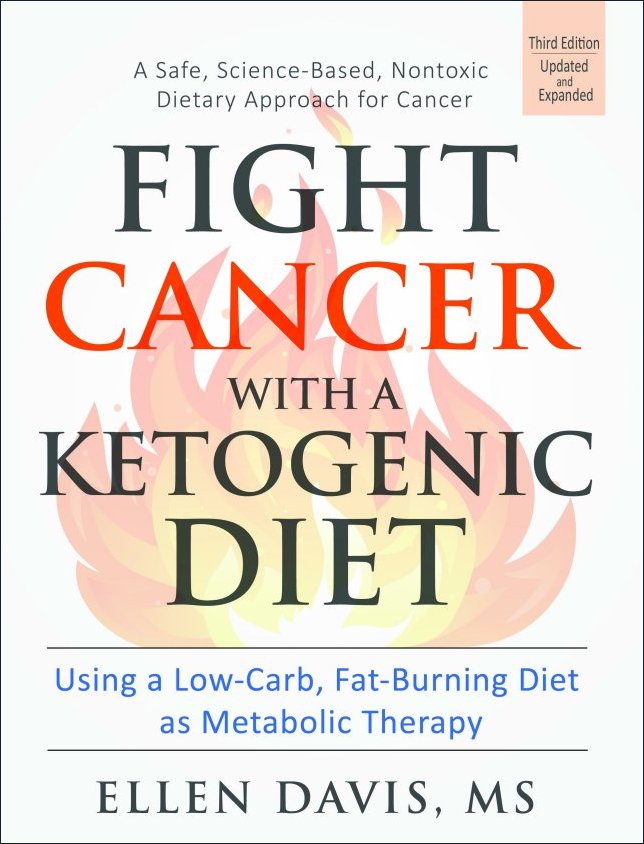
All of my books are available in electronic PDF, and now in paperback on Amazon!
 |
 |
 |
|
Buy paperbook on Buy paperback on Amazon Buy the e-Book via Paypal |
Buy paperback on Buy paperback on Amazon Buy the e-Book via Paypal |
Buy paperback on Buy paperback on Amazon Buy the e-Book via PayPal |